Vienna, 22 May 2026
On 10 April 2026, the European Commission adopted Delegated Act 2026/2680, amending Delegated Regulation (EU) 2019/807 under the Renewable Energy Directive. The act classifies soybean oil as a feedstock with a high risk of indirect land-use change (iLUC). From 2030 onwards, soybean oil would no longer count towards renewable fuel targets under the RED.
Donau Soja considers this classification scientifically flawed, politically contradictory and could weaken domestic soya value chains, increase import dependency and undermine the EU Protein Strategy.
European soybean oil is not the driver of global deforestation
Donau Soja fully supports the EU’s objective of reducing global land-use pressure and combating deforestation. However, the current classification does not demonstrate a credible causal link between the use of European soybean oil in biofuels and land-use change elsewhere. The evidence used by the Commission refers mainly to global soybean expansion and regions such as Latin America, South-East Asia and West Africa. It does not reflect the specific conditions of European soya production, which takes place under strict environmental rules and within traceable and certified value chains.
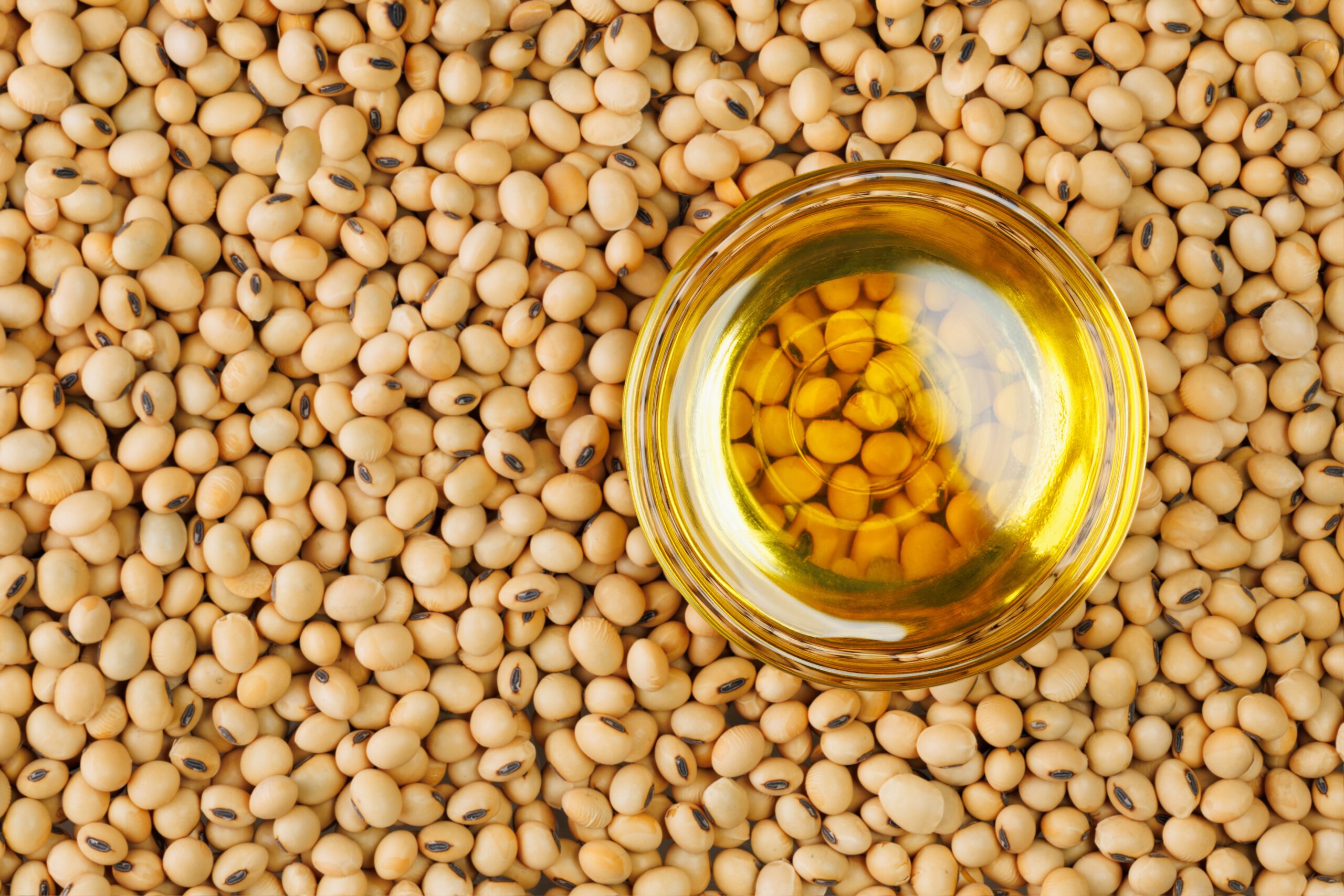
The methodology also fails to properly account for the co-product status of soybean oil. Soybeans are grown primarily for high-protein meal, which accounts for around 80% of the bean and is essential for European feed markets. Soybean oil represents only around 18% of the bean and is not the main driver of global soybean expansion. Applying the burden of global soybean expansion to this by-product misrepresents the real drivers of land-use change.
Low-iLUC certification is not a structural solution
The Commission presents low-iLUC risk certification as a possible pathway for soybean oil classified as high-iLUC. In practice, this is not a realistic solution for the European soya sector. The requirements are highly complex and burdensome. Producers would need to document baseline practices, demonstrate additional yield increases over a ten-year period, justify specific investments and undergo continuous certification monitoring. For many European farms and processors, this is administratively and financially unrealistic. It cannot serve as a structural solution for an entire European value chain built around regional production, processing, traceability and certification.
Alternative markets are not a viable transition pathway
The Commission has suggested that alternative uses for soybean oil — including food, feed, industrial applications or export markets — could provide a transition pathway for European producers. Alternative markets are limited. The EU processes around 15 million tonnes of soybeans annually. For many crushers, especially in landlocked regions, the biofuel market is the key outlet for soybean oil revenues – in some cases accounting for up to 80%. Food and industrial markets cannot simply absorb these volumes, as they are limited, price-sensitive and subject to specific technical requirements. Export markets are not a realistic solution either. Soybean oil is traded globally as a commodity, and European, non-GM, deforestation-free soybean oil does not receive a sufficient premium on international markets. For inland processing facilities, exports would also create additional transport costs and further reduce competitiveness.
If the biofuel outlet disappears, European crushing operations could become uncompetitive. This would reduce demand for European-grown soybeans, weaken regional processing capacity and risk a sharp decline in domestic soya cultivation. The EU already imports around 20 million tonnes of soybean meal annually, including from regions with documented deforestation risks. Weakening European production could therefore increase the very risks the act is intended to reduce.
Policy incoherence with the EU Protein Strategy
The Delegated Act is directly contradicts with several EU policy objectives. The EU Protein Strategy and the upcoming Protein Plan aim to expand European protein crop production and reduce import dependency. The Common Agricultural Policy (CAP) supports European soya as a strategic crop and calls for stronger domestic production capacity.
The classification also creates a contradiction with the EU Deforestation Regulation (EUDR). European soya value chains are traceable, certified and deforestation-free, and therefore aligned with the EUDR’s core objective. Treating European soybean oil in the same way as soy from high-risk regions undermines origin-based differentiation and weakens incentives for sustainable European production.
Aurélie Tournan, General Manager of Donau Soja, stated:
“This classification jeopardises EU food sovereignty. By weakening domestic protein production and undermining resilient European value chains, it directly contradicts the Union’s commitment to establish an EU Protein Strategy and reduce Europe’s dependency on imported proteins. If we destroy existing value chains now, we destroy the very foundation for the future expansion of EU soybean production.”
Donau Soja’s urgent call to action
Donau Soja fully supports the EU’s objective of reducing global land-use pressure, and asks the Commission to fulfil that mandate in a way that is scientifically rigorous, geographically differentiated, and coherent across EU policy frameworks.
Therefore, Donau Soja urges the Council and the European Parliament to object to Delegated Act 2026/2680, and calls on the Commission to:
- Carry out a new scientific assessment that reflects the co-product status of soybean oil, the real drivers of soybean expansion and possible crop substitution effects;
- Revise the Delegated Act so that European soybean oil is assessed in a regional and origin-based way, recognising traceability, deforestation-free production and credible certification schemes;
- Ensure policy coherence between the RED framework, the EU Deforestation Regulation, the EU Protein Strategy and the Common Agricultural Policy.
Critical dates and next steps
The Delegated Act is currently under an official scrutiny period, during which both the Council of the EU and the European Parliament can formally object to it. If no objection is adopted before the scrutiny period expires, the act enters into force automatically.
On 26 May 2026, Austria will raise the iLUC classification of soybean oil as an “Any Other Business” (AOB) item at the AGRIFISH Council. This is a timely and important opportunity to highlight the contradiction between the Delegated Act and the EU’s broader work on protein crops and agricultural resilience. The Council meeting is publicly listed by the Council of the EU.
In the European Parliament, the Committee on Industry, Research and Energy is the lead committee. The Committee on the Environment, Public Health and Food Safety provides an opinion. A Motion for Objection can be tabled by a political group or by at least 36 Members of the Parliament (MEPs). To reject the Delegated Act in plenary, an absolute majority of 361 MEPs is required.
Key upcoming dates include:
- 4 June 2026 – Next ITRE Committee meeting and possible deadline to file a Motion for Objection
- 6–9 July 2026 – Last European Parliament plenary session within the scrutiny period
- 10 August 2026 – Expiry of the scrutiny period
Donau Soja calls on EU institutions to act before the scrutiny period closes and to ensure that climate policy does not inadvertently dismantle the very foundations of a sustainable, European protein supply.
Delegated Act: https://data.consilium.europa.eu/doc/document/ST-8164-2026-INIT/en/pdf
Delegated Regulation: http://data.europa.eu/eli/reg_del/2019/807/oj
COM Report: eur-lex.europa.eu/legal-content/EN/TXT/HTML/?uri=CELEX:52019DC0142
RED: http://data.europa.eu/eli/dir/2018/2001/2024-07-16
Protein Strategy: EU Protein Strategy
Council Meeting: Council meeting