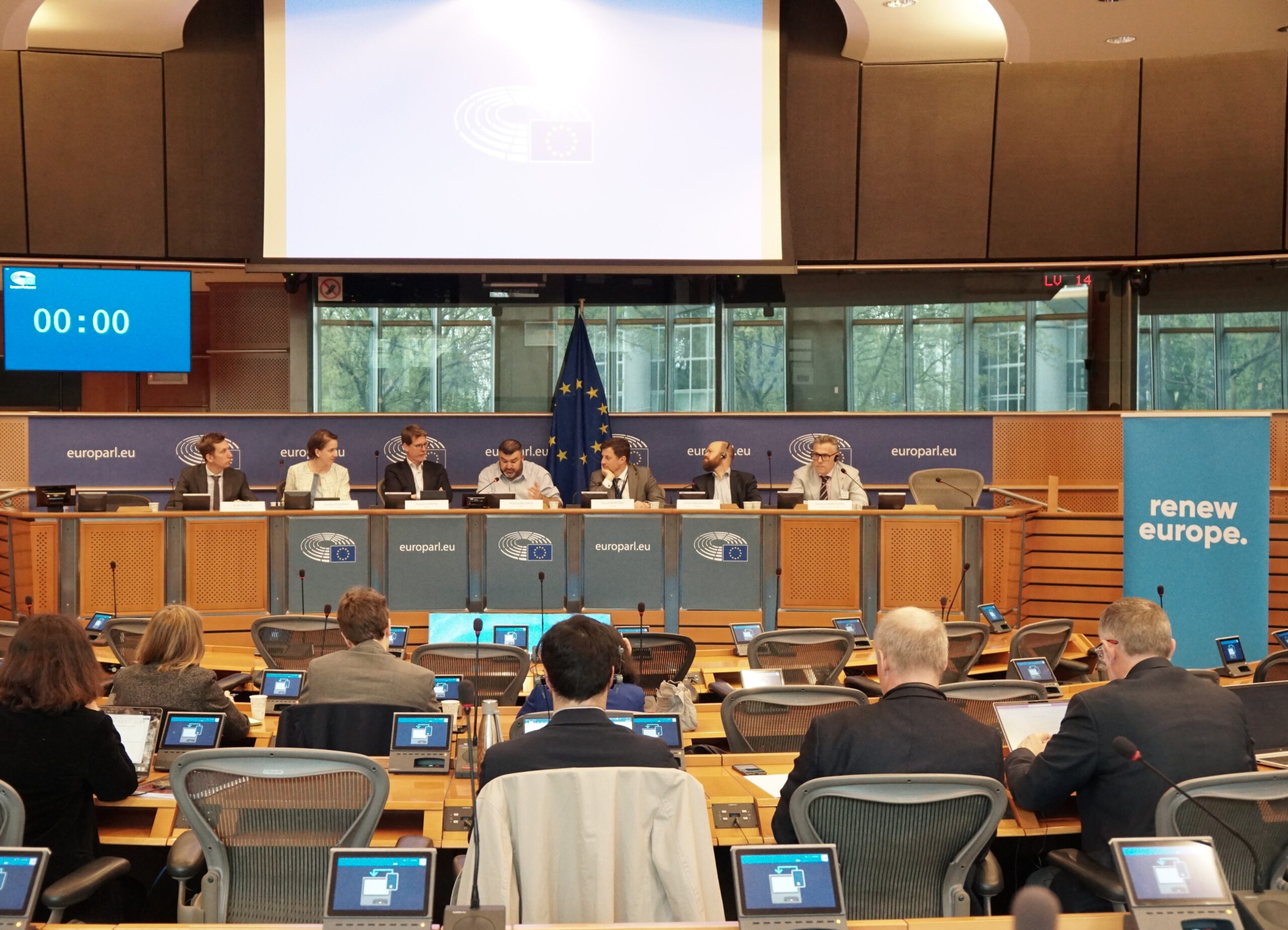
“Toward a European Protein Strategy: Challenges, Prospects, Solutions”
– under this roof, Donau Soja and the Ukrainian Agribusiness Club (UCAB) brought their shared vision to Brussels last week, organising a joint panel discussion at the European Parliament. The appeal of Aurélie Tournan, General Manager of Donau Soja: “We are only 8% self-sufficient in the EU – ensuring real food sovereignty means knowing and supporting the European origin of our feed and food.” Proven approaches already exist – certified European supply chains are proven and scalable. What is missing: a Protein Strategy to turn regional models into structural policy.
Over 90% of Europe’s soya imports come from just three countries from overseas, a structural dependency that exposes the entire food system to supply disruptions, trade conflicts, and price shocks. Strengthening European-origin protein – more soya grown and processed within Europe – is the most direct path to reducing this vulnerability. The central argument Donau Soja brought to Brussels: the agronomic potential exists and functioning business models are already proven. Certified European soya supply chains demonstrably reduce import dependency while strengthening food security, rural economies, and sustainability. “Food security affects us all, and sustainable agriculture makes it stronger. Europe has the standards, the models, and the market to act. Now we need the political will to back regional value chains and reduce import dependency”, states Aurélie Tournan.
In addition, diversifying sourcing is a strategic necessity for the EU. Ukraine is a good example of this: steadily increasing soya production and growing alignment with EU agricultural standards are important developments. However, fair competitive conditions for European farmers can only be ensured through clear frameworks such as the Europe Soya Standard – sustainably produced, non-GM, and without contributing to deforestation. For over a decade, Donau Soja has built a pan-European network of farmers, processors, retailers, and civil society around this shared reference, demonstrating what can be achieved when certification, market development, and strong partnerships come together.
Proven impact: Austria’s 60% local sourcing and Germany’s retail commitment
When the Austrian Poultry Association made certified European soya the sourcing standard for all producers, it created exactly the conditions regional supply chains require: a predictable annual demand that the sector chose to meet with certified European non-GMO soya instead of imports. Donau Soja provided the certification framework, technical support, and supply chain connections. The result: over 60% of soya used in Austrian egg production is now grown and processed domestically, avoiding more than one million tonnes of CO₂ emissions and keeping value in the region.
This also becomes clear in the food retail sector, where such market impulses are proving highly effective: in Germany, Europe Soya-certified soya is used in EDEKA’s animal welfare private label “Hofglück.” Signals like these from retailers create reliability and make investments in regional production economically attractive for producers.
From proven models to EU policy: scaling regional soya value chains
With these examples, Donau Soja was able to demonstrate in Brussels that regional European soya supply chains can be economically viable — when a credible certification standard is combined with binding commitments from cooperatives, producers, or retailers. The models are proven, the infrastructure exists — what Europe now needs is a targeted and comprehensive policy framework for soya and legumes to scale up these approaches more broadly and more quickly.
This includes stronger support for protein crops under the CAP (Common Agricultural Policy), creating targeted incentives for farmers to grow more legumes while also improving the economic framework conditions for soya cultivation in Europe. Equally important is clear origin labelling, giving consumers greater transparency and guidance and thereby strengthening demand for regional value chains
f.l.t.r. Pascal Canfin (Member of the European Parlament), Koen Dillen (European Commission), Nazar Bobitski (UCAB), Aurélie Tournan (Donau Soja), Jérémy Decerle (Member of the European Parlament), Oliver Balkhausen (Fediol), Daniele Marcomin (Oleificio San Giorgio)
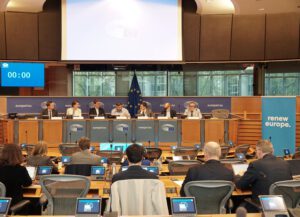
f.l.t.r. Koen Dillen (European Commission), Aurélie Tournan (Donau Soja), Pascal Canfin and Jérémy Decerle (Members of the European Parlament), Nazar Bobitski (UCAB), Oliver Balkhausen (Fediol), Daniele Marcomin (Oleificio San Giorgio)
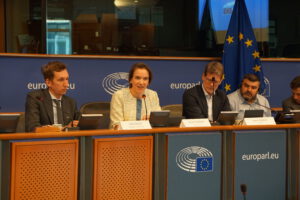
f.l.t.r. Koen Dillen (European Commission), Aurélie Tournan (Donau Soja), Pascal Canfin and Jérémy Decerle (Members of the European Parlament), Nazar Bobitski (UCAB)
Download pictures ©Donau Soja
Download Press release
About Donau Soja
Donau Soja is a non-profit, independent association who supports its partners and members in progressing change to address social, environmental, and economic challenges in soya, legumes and protein production and consumption. This will increase efficiency, fairness and sustainability in European food and feed protein value chains. Donau Soja is supported by the Austrian Development Agency (ADA)
Contact
Lilly Speckner
Marketing & Communications Manager
Donau Soja
speckner@donausoja.org
Tel. +43 512 17 44 – 10