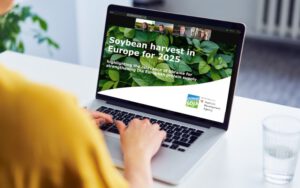
European soya harvest 2025: key results at a glance
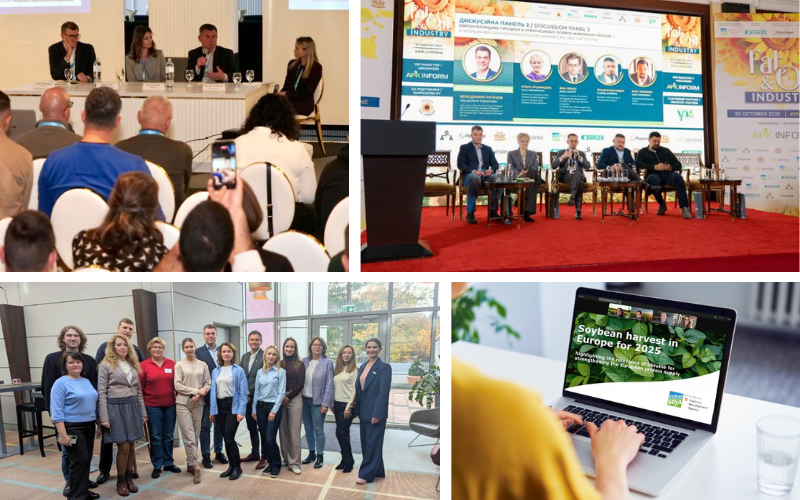
At our recent Donau Soja webinar, experts presented the main findings of the 2025 European soya harvest and their relevance for Europe’s protein and climate ambitions.
The data show stable production across Europe, with Ukraine continuing to secure a significant share of regional supply despite ongoing challenges. The results highlight the strategic importance of expanding sustainable, deforestation- and conversion-free soya production to strengthen Europe’s Protein Strategy and reduce CO₂ emissions in agri-food value chains.
Europe remains only partly self-sufficient in soya – 25 percent across the continent and just 8 percent within the EU. Stronger cooperation with neighbouring countries and support mechanisms such as Protein Partnerships in Ukraine will be essential to closing this gap.
Soya meal produced with Donau Soja-certified beans continues to demonstrate a significantly lower carbon footprint. According to FiBL Austria life cycle assessments, emissions amount to 0.36 kg CO₂e per kilogram of soya meal, more than 50 percent below the European average.
Webinar recording and presentations:
https://www.youtube.com/watch?v=Zjxgp8_Dh8k
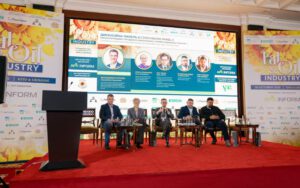
Fat-and-Oil Industry-2025: EU integration and decarbonisation in focus
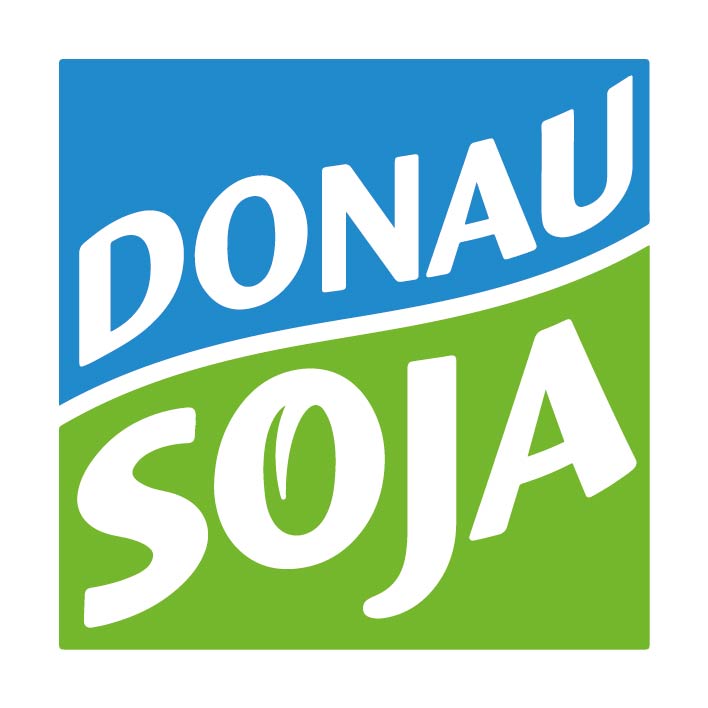
The Fat-and-Oil Industry-2025 conference in Kyiv concluded with a high-level panel discussion on “EU integration processes in Ukraine’s fat-and-oil sector”, moderated by Volodymyr Pugachov, Executive Director of Donau Soja in Eastern Europe.
The discussion placed a strong emphasis on the dual priorities shaping the future of the sector: EU integration and the urgent need for decarbonisation. It was highlighted that Ukraine’s oilseed complex — and soya in particular — holds the potential to contribute to solving two strategic EU challenges: protein self-sufficiency and Green-energy transition.
At the same time, participants underlined that alignment with EU standards is a demanding process, requiring significant effort on multiple levels. The challenges include limited institutional capacity to implement and enforce new regulations, rising production costs due to stricter environmental and phytosanitary requirements, and limited financial resources — especially for small and medium-sized enterprises.
The topic of decarbonisation emerged as central to long-term competitiveness. Ukrainian Protein Partnership participants are already benefiting of adapting to EU sustainability requirements, including carbon footprint reduction. The Donau Soja RED-compliant certification scheme was mentioned, which will become a clear market advantage, especially in light of the growing importance of climate-related compliance criteria.
The panel also addressed broader questions of regulatory transition, logistics infrastructure, and trade access. While the timeline for Ukraine to align with EU rules is compressed compared to past enlargements, the expected benefits include enhanced access to investment tools, market recognition, and more resilient integration into both European and global value chains.
Strengthening connections: Moldovan & Ukrainian delegation at the Non-GMO Soy Conference 2025
Our Donau Soja colleagues accompanied a delegation from Moldova and Ukraine to the Non-GMO Soy Conference 2025, co-organised by Donau Soja and ProTerra Foundation. The delegation’s participation fosters knowledge exchange, partnership building and stronger integration within the global non-GM community. During the conference, the delegates met with Alexander Hissting from VLOG to exchange perspectives on certification, market access and future cooperation within sustainable, non-GM value chains. In collaboration with the Austrian Development Agency (ADA), our Strategic Partnership continues to advance sustainable agricultural practices and innovation. These international exchanges are vital to expanding the non-GM sector in Ukraine and Moldova, promoting sustainable, deforestation- and conversion-free value chains and driving regional development.
Together, we are shaping a resilient and sustainable agricultural future – connecting regional innovation with sustainable food and feed systems across Europe.
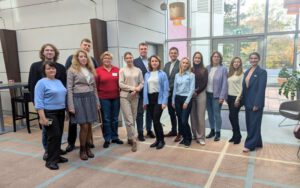
Second Regional Conference on Regenerative Agriculture successfully held in Novi Sad
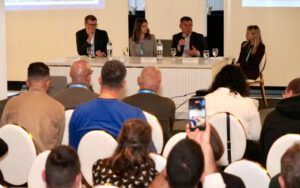
At the end of October Donau Soja, in partnership with EIT Food, hosted the Second Regional Conference Ready for climate challenges: the perspective of regenerative agriculture in Novi Sad, Serbia. The event was organised as part of the EIT Food Regenerative Agriculture Programme and brought together more than 120 participants from across the agri-food sector.
The conference provided a dynamic platform for farmers, processors, companies, scientists, NGOs, financial institutions, and donors to discuss how sustainable and regenerative agricultural practices can address climate change and strengthen resilience in modern farming systems.
A sincere thank you goes to all speakers and panellists for their valuable insights and contributions! Our appreciation also goes to moderator Marija Ćeklić, who guided the discussions throughout the day with professionalism and clarity.
Donau Soja remains committed to supporting the transition towards regenerative agricultural systems and to empowering stakeholders across the agri-food value chain in building a more sustainable and climate-resilient future for European agriculture.
More information on the project can be found here: https://www.donausoja.org/eit-food-regenerative-agriculture-programme/