EU nitrogen fertiliser imports have dropped at an unprecedented scale. In January 2026, the European Union imported only 179,877 tonnes, compared to 1,183,728 tonnes in January 2025 – a decline of more than 80%.
Several factors are contributing to this sharp drop. The entry into application of the Carbon Border Adjustment Mechanism (CBAM) has introduced additional carbon pricing, reporting and verification requirements for certain imports, including fertilisers. However, Commissioner Hoekstra has already ruled out suspending the CBAM for fertilisers. At the same time, fertiliser prices on the EU market have increased by approximately 25% compared to the 2024 average, partly due to new import tariffs on Russian nitrogen fertilisers. And the current crisis in the Middle East is likely to have an impact on fertiliser prices too, according to Commissioner Hansen.
For many arable crops, these cost increases may become economically unsustainable. International farmer organisations warn that current fertiliser stocks may cover only 45-50% of the nitrogen needed for the 2026 harvest, raising concerns about input availability and production stability. However, increased quantities were imported in December, before the CBAM came into effect, which offset part of the drop in January.
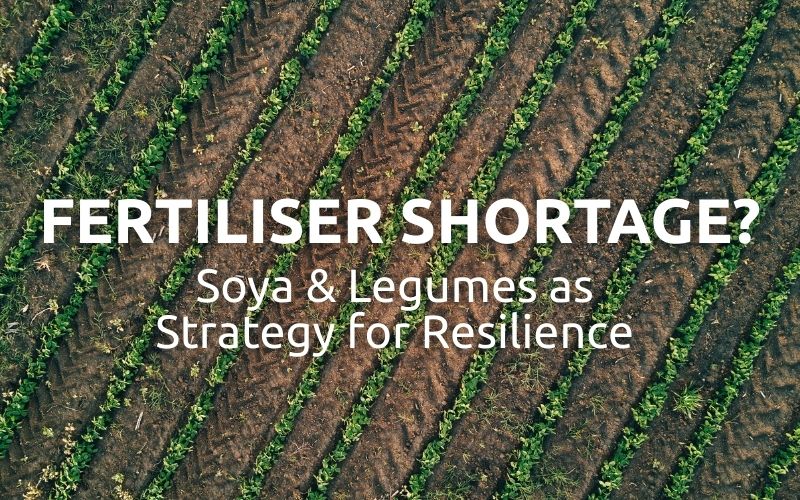
Soya and Legumes as a Strategy for Resilience
In this challenging situation, soya and other legumes offer a practical strategy for resilience.
Unlike most conventional arable crops, legumes require little to no synthetic nitrogen fertiliser. Through biological nitrogen fixation, they are able to bind atmospheric nitrogen and convert it into plant-available nutrients. This natural process significantly reduces dependence on mineral nitrogen fertilisers.
As a result, legume cultivation:
- Lowers exposure to N-fertiliser price volatility
- Reduces vulnerability to supply shortages
- Supports more stable production under disrupted market conditions
Even under current market pressures, stable yields remain possible with legumes, making them a strategic crop choice in times of input uncertainty.
Strengthening European Agricultural Autonomy
Beyond short-term relief, expanding soya and legume production contributes to broader agricultural resilience. By reducing dependency on imported nitrogen fertilisers, farmers can strengthen their cost stability and enhance the sustainability of their production systems.
In a period marked by supply disruptions and geopolitical uncertainty, increasing European soya cultivation is not only an agronomic solution but also a strategic step toward greater autonomy and long-term resilience in EU agriculture.
Act Now
The soya sowing season begins when the soil temperature reaches at least 10 degrees, which will be the case in most regions in 1-2 months. Unlike other legumes, soybeans do not contribute to legume fatigue and can therefore be integrated spontaneously into crop rotation.
Farmers can therefore still switch to soybeans this year and achieve good yields even without nitrogen fertiliser!