
So many strengths. One Superbean.
Many people don’t realise how much soya contributes to our food systems – and it is about far more than tofu. Soya can be a real multitasker. It provides high-quality protein for people and animals, grows well as part of a varied crop rotation and gives farmers another way to build resilient farms.
When grown in Europe under the Europe Soya Standard, you know where your soya comes from. It is non-GM and meets clear rules that help prevent deforestation and protect soil and nature. Compared with soya from overseas (USA, Argentina and Brazil), it also has a lower climate impact.
Growing more soya in Europe means producing more of the protein we need within our own food system. This can help reduce our reliance on imports and make our food system more regional, resilient and responsible.
The Soya Superbean shows that sometimes the greatest power comes in the smallest form.

Why the origin of soya matters
A reliable supply of protein is essential for European agriculture. Animals need protein to stay healthy and grow. Where this protein comes from and how it is produced also influences its climate impact.
Did you know?
According to “Land schafft Leben” (2022) 75% of all soya used worldwide goes into animal feed, where it plays a crucial role in providing animals with the nutrients they need. That’s why choosing products that carry the Europe Soya label helps support a sustainable, safe and European protein supply.
The Europe Soya Standard requires:
- Production to clear criteria
- Non-GM soya
- No deforestation or land-use change
- A fully traceable supply chain
That means more transparency about where soya comes from and how it is produced.
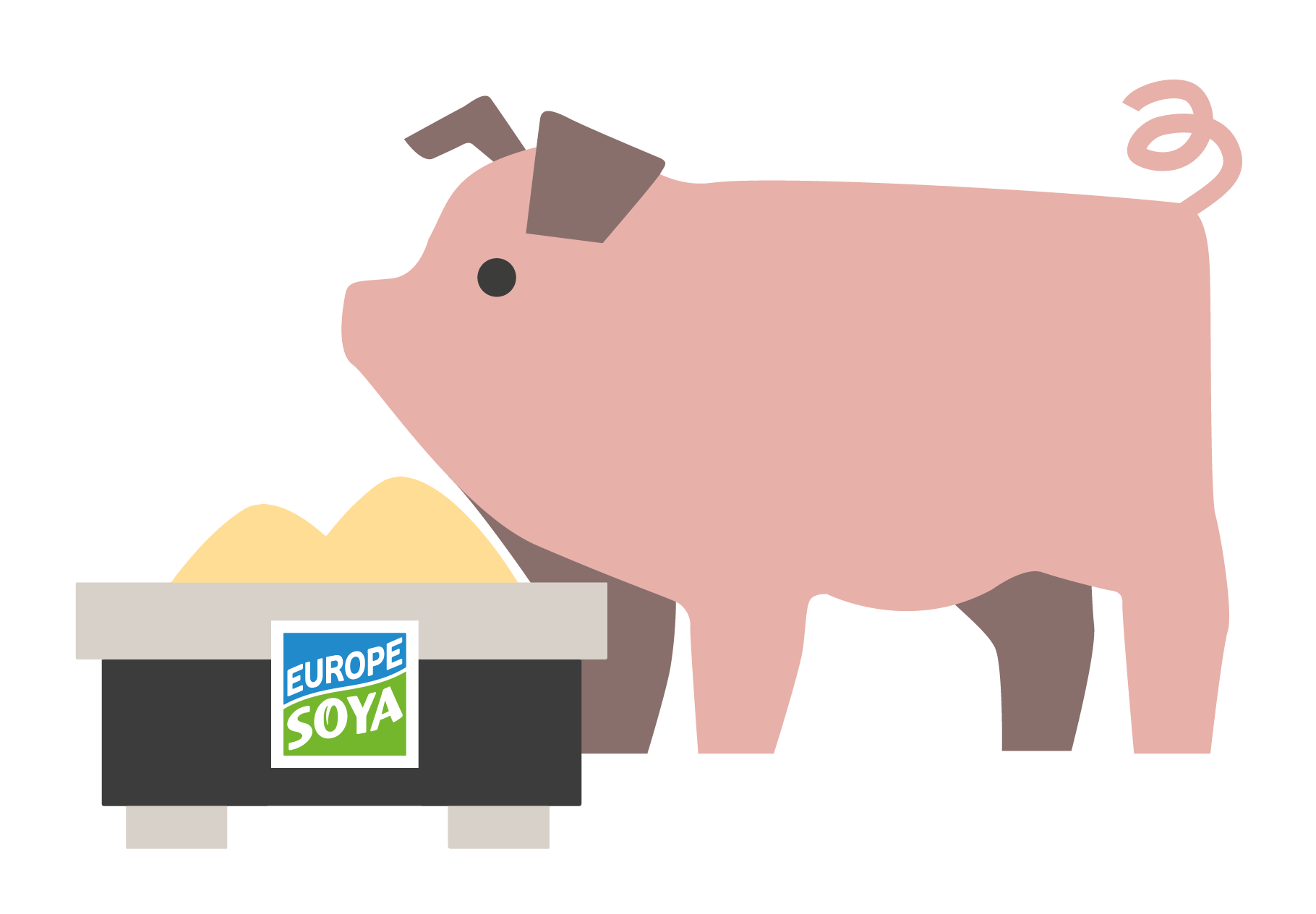
The feed given to pigs matters
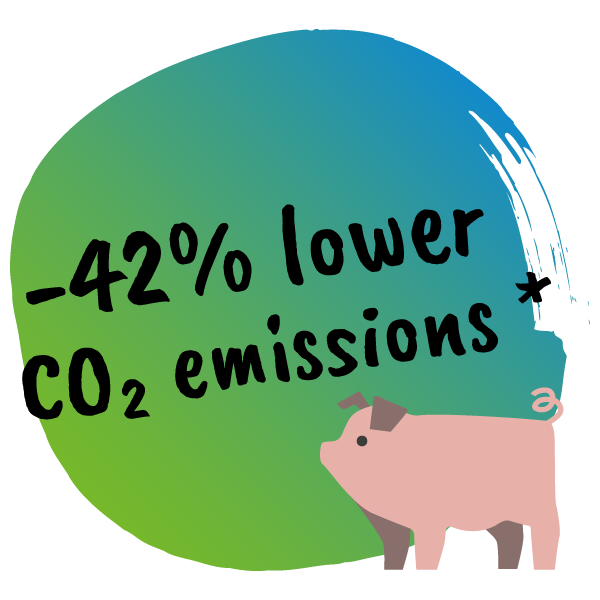
When pigs are fed with Europe Soya-certified soya, this can reduce emissions across the value chain. In a FiBL Austria Life Cycle Assessment (LCA), pork from pigs fed with Europe Soya has a CO2 footprint 42% lower than pork from pigs fed with soya sourced from overseas (50% from the USA, 50% from Brazil).
This shows how the choice of feed can make a real difference to the climate impact of the food we eat.
Study details see in the LCA of FiBL Austria
A small egg. A conscious choice.
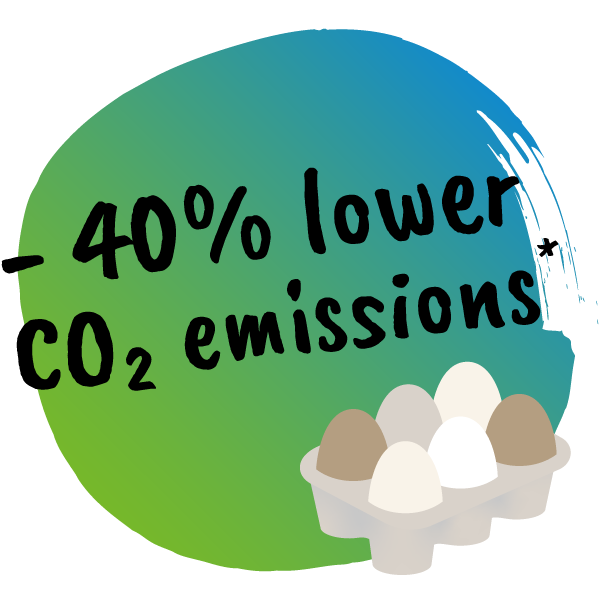
A Product Carbon Footprint (PCF) study by BOKU Vienna found that conventional eggs from hens fed with Europe Soya-certified feed have a CO2 footprint 40% lower than an average egg produced in the EU.
This industry solution, developed together with the Austrian Poultry Association, shows that choosing the right feed can make a real difference to the carbon footprint of the food we eat.
Study details see in the PCF study by BOKU Vienna
European Soya: One crop, many benefits
Climate impact

no deforestation
Shorter routes, closer to Europe
Soya in a varied crop rotation
Climate impact
no deforestation
Shorter routes, closer to Europe
Soya in a varied crop rotation
LOWER CO₂ emissions along the value chain
European soya certified under the Europe Soya Standard has a 90% lower CO2 footprint across the assessed value chain than the reference soya used in the relevant studies. This shows how the choice of soya can affect the carbon footprint of animal feed and food products. Study details can be found here.

No Deforestation
European soya is grown without deforestation or land-use change. The Europe Soya Standard has required deforestation-free production for years and already includes key requirements of the EU Deforestation Regulation (EUDR), which is being introduced step by step. With the Europe Soya label, consumers can see that the soya comes from a defined European origin and follows clear production requirements.

Shorter routes, closer to Europe
Because Europe Soya is grown and processed in Europe, it travels shorter distances to feed mills and food producers than soya transported from outside Europe. This means fewer transport kilometres and lower transport-related emissions. It also helps keep more of the protein supply in Europe and supports regional supply chains.
Soya in a varied crop rotation
As a legume, soya captures nitrogen from the air and adds it naturally to the soil. This can help reduce the need for nitrogen-based synthetic fertilisers and conserve resources. Soya also fits well into a varied crop rotation. This means growing different crops in the same field from year to year instead of planting the same crop repeatedly. This variety helps maintain soil fertility, supports biodiversity and can help reduce diseases and pests naturally.
One label, the same trusted standard
Donau Soja and Europe Soya are becoming one European standard. During the transition, products may carry either logo. In the future, Europe Soya will be the single label for soya grown in Europe under strict controls – deforestation-free and non-GM.
What does this mean for you?
Nothing changes. Products with the Donau Soja label already meet the Europe Soya requirements. Only the name is changing. The same trusted criteria remain in place, so you can continue to choose soya grown in Europe, for Europe.
Multitalent Soya
Protein source for animals
- High-quality protein for pigs, poultry and other farm animals
- 75% of soya worldwide is used in animal feed (acc. to Land schafft Leben, 2022)
- Lower CO2 footprint of selected animal products when Europe Soya-certified soya was used in the feed (acc. to studies of BOKU Vienna and FiBL Austria)
Plant-based food
- A source of plant protein and other nutrients
- Versatile in everyday foods
- An easy way to add variety to meals
European origin
- Grown by farmers in Europe
- Shorter transport routes & traceable origins
- Helps reduce reliance on imported soya from overseas (USA, Argentina and Brazil)
Part of a varied crop rotation
- Fits well into crop rotations
- Takes nitrogen from the air and can reduce the need for nitrogen-based synthetic fertilisers
- Supports healthy soils and helps prevent soil diseases

About Donau Soja
Donau Soja brings together farmers, processors, food companies and other partners across the value chain. Together, we work towards a sustainable, safe and European protein supply. The Europe Soya Standard sets clear rules for how soya is grown and handled. It must come from Europe, be non-GM and deforestation-free, and remain traceable from the farm to the final product. European soya provides protein for animal feed and food. Because it is grown closer to where it is used, it can travel shorter distances and reduce reliance on imported soya.
Eggs that make a difference: 40% lower CO2 emissions
A study by the University of Natural Resources and Life Sciences, Vienna (BOKU) examined how feed affects the CO2 footprint of eggs. Compared with the reference eggs used in the study, eggs from hens fed Europe Soya-certified soya have a 40% lower carbon footprint. The findings show that the choice of feed also influences the climate impact of food.
According to the Austrian Poultry Association, half of the soya currently used comes from Austria, helping to strengthen regional supply chains. Through the Europe Soya Standard, Donau Soja combines regional sourcing with traceability throughout the supply chain. Find more details about the study here.

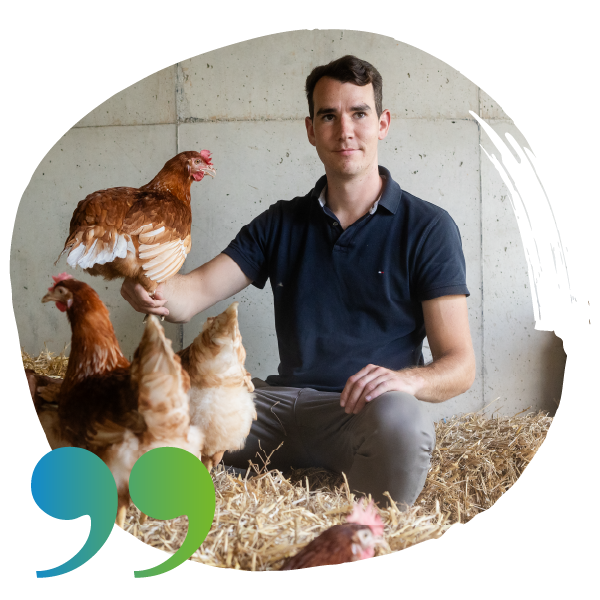
Hans-Peter Schlegl
“By using Europe Soya, we ensure a high-quality protein supply – GMO-free and sustainable.”
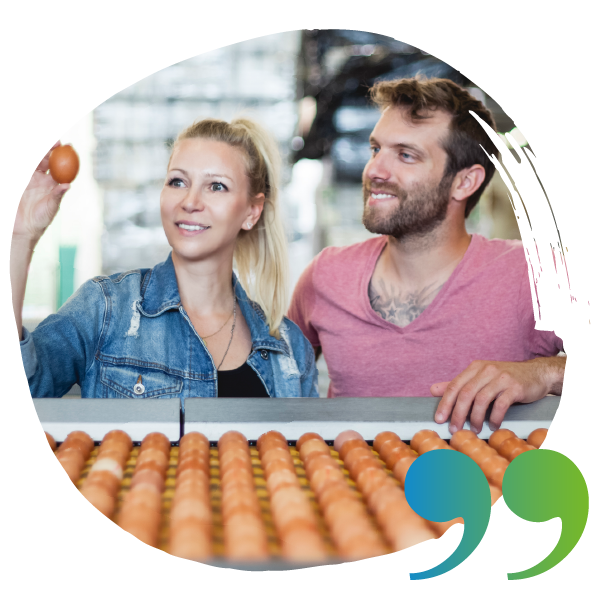
Barbara Schlögl-Artner, Schlögl-Ei
„For us, Europe Soya is more than feed – it is a commitment to responsibility, regional production and environmental protection. This is where sustainability begins: in the barn.”
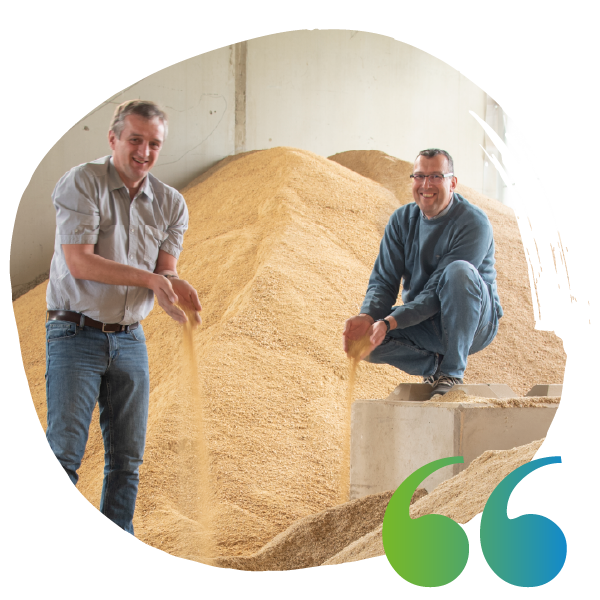

13 years, one industry-wide approach – Austria leads the way
Since 2013, the Austrian egg industry has used feed containing soya certified under the Europe Soya Standard, in collaboration with the Austrian Poultry Association. This long-term industry approach supports the use of certified European protein in egg production. It shows how feed sourcing can contribute to more regional supply chains and, where documented, help reduce the feed-related CO2 footprint.
Michael Wurzer, General Manager of the Austrian Poultry Association, confirms: “For over a decade now, the Austrian egg industry has been united in its commitment to Europe Soya-certified feed, an industry-wide solution that strengthens both the climate and regional value creation in equal measure. Over the past 13 years, this has resulted in savings of over one million tonnes of CO₂, whilst at the same time specifically supporting local businesses, regional circular economies and European protein production.”
Long-term cooperation across the value chain and growing domestic production are helping to strengthen regional protein supply and security of supply. According to the Austrian Federal Ministry of Agriculture, Austria harvested around 272,000 tonnes of soybeans in 2025, making it the European Union’s third-largest producer after Italy and France. With around 86,000 hectares under cultivation, Austria also ranked among the EU’s top five countries by soybean cultivation area.

Best practices 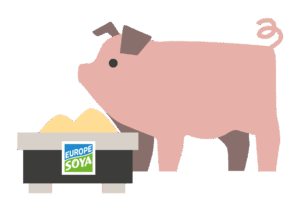
The Rudolf Großfurtner GmbH has been an active member of Donau Soja since 2018 and supports a sustainable, secure protein supply in Europe by using Europe Soya-certified soya in their feed. This ensures responsibly produced pork products that consumers can enjoy with a good feeling. Read more
The GUSTINO brand focuses on regional feed sourcing and on-farm production. Its pigs are kept on straw and fed exclusively with feed sourced from the region, much of which is grown directly on the farms. In its “Klimafit” module, GUSTINO uses soya certified under the Europe Soya Standard. Read more

Best practices
Rudolf Großfurtner GmbH
The Rudolf Großfurtner GmbH has been an active member of Donau Soja since 2018 and supports a sustainable, secure protein supply in Europe by using Europe Soya-certified soya in their feed. This ensures responsibly produced pork products that consumers can enjoy with a good feeling. Read more
Gustino
The GUSTINO brand focuses on regional feed sourcing and on-farm production. Its pigs are kept on straw and fed exclusively with feed sourced from the region, much of which is grown directly on the farms. In its “Klimafit” module, GUSTINO uses soya certified under the Europe Soya Standard. Read more
Eggs that make a difference: 40% lower CO2 emissions
A study by the University of Natural Resources and Life Sciences, Vienna (BOKU) examined how feed affects the CO2 footprint of eggs. Compared with the reference eggs used in the study, eggs from hens fed Europe Soya-certified soya have a 40% lower carbon footprint. The findings show that the choice of feed also influences the climate impact of food.
According to the Austrian Poultry Association, half of the soya currently used comes from Austria, helping to strengthen regional supply chains. Through the Europe Soya Standard, Donau Soja combines regional sourcing with traceability throughout the supply chain. Find more details about the study here.

Alexandra Poringer, poringer.frisch.ei
„By using certified Europe Soya, we rely on a non-GM protein source from Europe, ensuring transparency and reliability throughout the value chain while creating real added value for consumers, agriculture, and the environment. Sustainability is not a trend for us – it is a long-term commitment.“
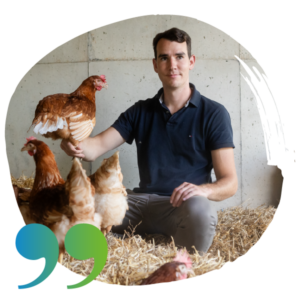
Hans-Peter Schlegl
“By using Europe Soya, we ensure a high-quality protein supply – GMO-free and sustainable.”
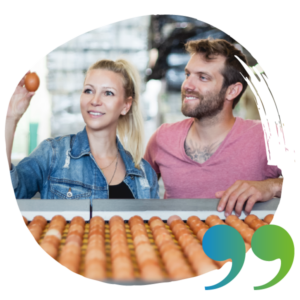
Barbara Schlögl-Artner, Schlögl-Ei
„For us, Europe Soya is more than feed – it is a commitment to responsibility, regional production and environmental protection. This is where sustainability begins: in the barn.”
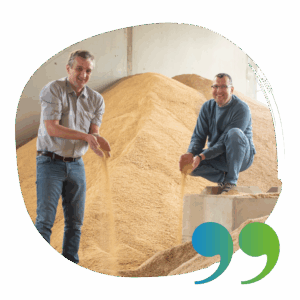
Bernhard Monschein & Johann Hebenstreit
(MH-Agrarhandel)
“The switch to Donau Soja in 2013 has made Austrian egg production a pioneer in climate action.”
13 years, one industry-wide approach – Austria leads the way
Since 2013, the Austrian egg industry has used feed containing soya certified under the Europe Soya Standard, in collaboration with the Austrian Poultry Association. This long-term industry approach supports the use of certified European protein in egg production. It shows how feed sourcing can contribute to more regional supply chains and, where documented, help reduce the feed-related CO2 footprint.
Michael Wurzer, General Manager of the Austrian Poultry Association, confirms: “For over a decade now, the Austrian egg industry has been united in its commitment to Europe Soya-certified feed, an industry-wide solution that strengthens both the climate and regional value creation in equal measure. Over the past 13 years, this has resulted in savings of over one million tonnes of CO₂, whilst at the same time specifically supporting local businesses, regional circular economies and European protein production.”
Long-term cooperation across the value chain and growing domestic production are helping to strengthen regional protein supply and security of supply. According to the Austrian Federal Ministry of Agriculture, Austria harvested around 272,000 tonnes of soybeans in 2025, making it the European Union’s third-largest producer after Italy and France. With around 86,000 hectares under cultivation, Austria also ranked among the EU’s top five countries by soybean cultivation area.
Toolkit – Ready to use & Free to share
To support your communication around the campaign, we have developed a Member Toolkit (en & de) containing ready-made visuals, key facts and background information.
Download now from the Members’ Area.
Not a member (yet) but interested? Please contact news@donausoja.org